Quick answer: Gluconeogenesis is the synthesis of glucose from noncarbohydrate precursors such as lactate, pyruvate, glucogenic amino acids, glycerol and propionate. It occurs mainly in the liver, with some in the kidney. It reverses glycolysis except for three irreversible steps, bypassed by four reactions. It maintains blood glucose in fasting, and glucagon stimulates it.
What is gluconeogenesis and why does the body need it?
Gluconeogenesis is the synthesis of glucose from noncarbohydrate compounds. A glucogenic amino acid is an amino acid whose carbon skeleton can be turned into glucose.
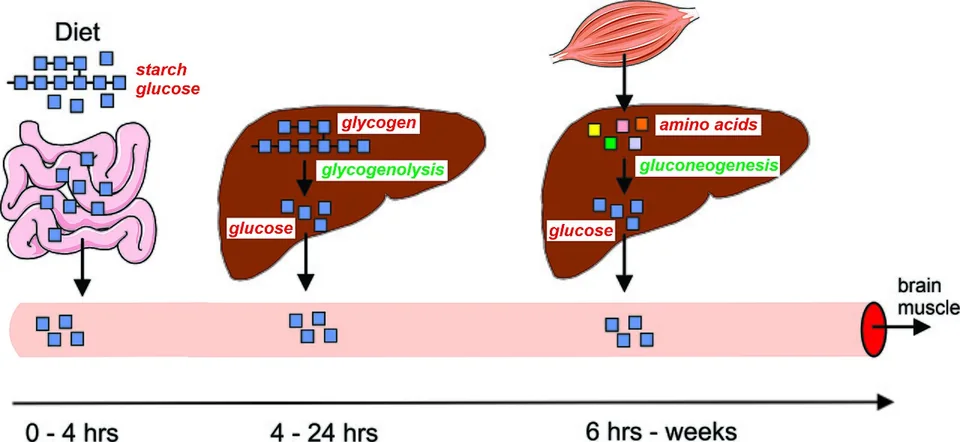
Blood glucose comes from three sources: the diet, glycogenolysis (breakdown of glycogen) and gluconeogenesis. Diet is irregular, and liver glycogen can meet the needs of glucose-dependent tissues for only 10 to 18 hours without dietary carbohydrate. After an overnight fast, glycogenolysis and gluconeogenesis contribute about equally to blood glucose. As glycogen runs out, gluconeogenesis becomes more and more important.
Reasons it matters:
- The brain and central nervous system, erythrocytes, testes and kidney medulla depend on a continuous supply of glucose. The human brain alone needs about 120 g of glucose a day, out of about 160 g needed by the whole body.
- Glucose is the only fuel for skeletal muscle under anaerobic conditions.
- In a fast of more than a day, gluconeogenesis must occur to meet the basal glucose needs of the body and to maintain the intermediates of the citric acid cycle.
- It clears metabolites that build up in blood, such as lactate, glycerol and propionate.
Failure of gluconeogenesis is usually fatal, because hypoglycaemia (low blood glucose) causes brain dysfunction.
Where does it happen?
- Tissues: mainly the liver (about 1 kg of glucose a day) and, to a lesser extent, the kidney (about one-tenth of liver capacity in the fed or overnight state). During an overnight fast about 90% occurs in the liver and 10% in the kidney. In prolonged fasting the kidney becomes a major glucose-producing organ and may contribute about 40% of total glucose production.
- Intestine: the key enzymes are present in the small intestine, but it is unclear whether it makes significant glucose in the fasting state.
- Cell compartments: mainly the cytosol, but some steps are in the mitochondria, so the pathway needs both mitochondrial and cytosolic enzymes.
Substrates
| Substrate | Where it comes from | How it enters |
|---|---|---|
| Lactate | Exercising skeletal muscle, and cells without mitochondria such as red blood cells | Oxidised to pyruvate in the liver (Cori cycle) |
| Glucogenic amino acids | Breakdown of tissue proteins; the major source of glucose during a fast | As pyruvate or as intermediates of the citric acid cycle. Alpha-ketoacids such as alpha-ketoglutarate form oxaloacetate |
| Glycerol | Lipolysis of triacylglycerol in adipose tissue | Glycerol kinase (liver and kidney) makes glycerol 3-phosphate, then glycerol 3-phosphate dehydrogenase makes dihydroxyacetone phosphate, a glycolytic intermediate |
| Propionate | Odd-chain fatty acids and breakdown of some amino acids (methionine, isoleucine) | Propionyl CoA becomes methylmalonyl CoA, then succinyl CoA, which enters via the citric acid cycle |
Adipocytes cannot use glycerol for this, because they essentially lack glycerol kinase.
In humans propionate is a relatively minor substrate. It is a major precursor of glucose in ruminants.
Can fat be turned into glucose?
Mostly no. This is a favourite exam point.
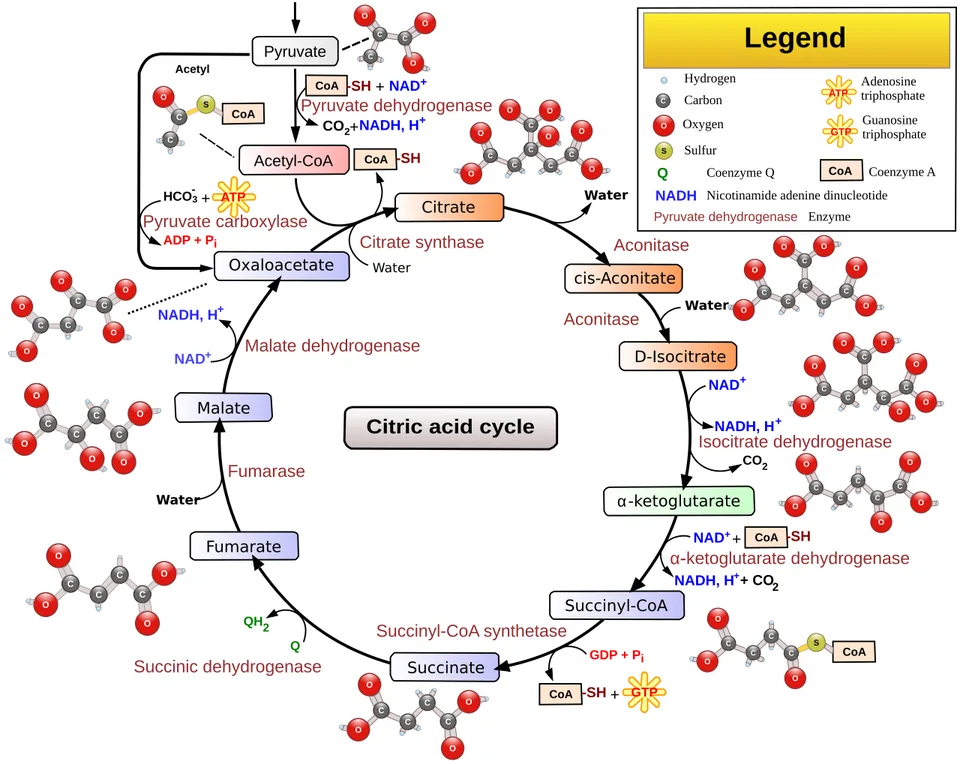
- Even-chain fatty acids break down to acetyl CoA. Acetyl CoA cannot be converted back to pyruvate, because the pyruvate dehydrogenase reaction is irreversible. In the citric acid cycle its two carbons leave as CO2, so there is no net gain of carbon.
- Animals also lack the glyoxylate cycle, which is the prime reason they cannot convert fat to glucose.
- Compounds that give rise only to acetyl CoA, such as acetoacetate and the amino acids lysine and leucine, give ketone bodies instead. They are called ketogenic.
- The exceptions are glycerol and propionate from odd-chain fatty acids. Both are good gluconeogenic substrates.
Fatty acid oxidation still matters for gluconeogenesis. It supplies the ATP needed for making glucose, and the acetyl CoA it produces activates pyruvate carboxylase.
The pathway: reversing glycolysis with four bypasses
Gluconeogenesis closely resembles glycolysis run backwards, but it is not a complete reversal. Seven of the ten glycolytic reactions are reversible and are shared by both pathways. Three are physiologically irreversible and must be circumvented by four alternative reactions that favour glucose synthesis. Glycolysis cannot simply be reversed because its overall equilibrium strongly favours pyruvate formation.
| Irreversible glycolytic step | Gluconeogenic bypass | Key points |
|---|---|---|
| Phosphoenolpyruvate (PEP) to pyruvate (pyruvate kinase) | Pyruvate to oxaloacetate (pyruvate carboxylase), then oxaloacetate to PEP (PEP carboxykinase, PEPCK) | Carboxylase is mitochondrial, needs biotin and ATP, and is activated by acetyl CoA. PEPCK is cytosolic and uses GTP |
| Fructose 1,6-bisphosphate to fructose 6-phosphate (phosphofructokinase-1) | Fructose 1,6-bisphosphatase | Needs Mg2+. Found in liver and kidney, absent in smooth muscle and heart muscle. A key regulatory site |
| Glucose to glucose 6-phosphate (hexokinase) | Glucose 6-phosphatase | Needs glucose 6-phosphate translocase to carry the substrate into the endoplasmic reticulum. Present in liver and kidney only |
The four enzymes unique to gluconeogenesis: pyruvate carboxylase, PEP carboxykinase, fructose 1,6-bisphosphatase, glucose 6-phosphatase. Link them to their cofactors: biotin goes with the carboxylase, GTP with PEPCK.
Step 1: pyruvate to PEP
- In the mitochondrion, pyruvate carboxylase adds CO2 (carried on biotin, taken from bicarbonate) to pyruvate and makes oxaloacetate. This uses ATP.
- Oxaloacetate cannot cross the mitochondrial membrane. It is reduced to malate, which is exported to the cytosol and oxidised back to oxaloacetate. Malate dehydrogenase, present in both compartments, catalyses this.
- In the cytosol PEPCK decarboxylates and phosphorylates oxaloacetate to PEP. It uses GTP (or ITP), not ATP, and releases the CO2 that the carboxylase added.
Pairing a carboxylation with a decarboxylation drives reactions that would otherwise be energetically unfavourable. In all, converting pyruvate to PEP costs 2 ATP equivalents, whereas glycolysis gains only one ATP at the reverse step.
From PEP the pathway runs backwards through the shared glycolytic reactions until it reaches fructose 1,6-bisphosphate.
Step 2: fructose 1,6-bisphosphate to fructose 6-phosphate
Fructose 1,6-bisphosphatase removes a phosphate and bypasses phosphofructokinase-1. Fructose 6-phosphate is then converted to glucose 6-phosphate by a reversible shared reaction.
Step 3: glucose 6-phosphate to glucose
Glucose 6-phosphatase bypasses hexokinase. The presence or absence of this enzyme decides whether a tissue can put glucose into the blood. It is mostly present in liver and kidney and absent in muscle, brain and adipose tissue. Muscle therefore cannot export free glucose.
Energy cost
The overall reaction, from two pyruvate, is:
2 pyruvate + 4 ATP + 2 GTP + 2 NADH + 2 H+ + 6 H2O gives glucose + 2 NAD+ + 4 ADP + 2 GDP + 6 Pi + 6 H+
Gluconeogenesis is an energy-requiring pathway. This high ATP cost is why very low carbohydrate diets, which force a lot of gluconeogenesis from amino acids, depend on fatty acid oxidation to supply the ATP.
Cori cycle and glucose-alanine cycle
Cori cycle (lactic acid cycle): Exercising muscle and red blood cells make lactate by glycolysis. Lactate passes freely out of the cell, travels in blood to the liver (and kidney), and is oxidised to pyruvate. Gluconeogenesis turns the pyruvate into glucose, which returns to the blood and is used again by muscle and other tissues.
Glucose-alanine cycle: In fasting, skeletal muscle releases a lot of alanine, far more than comes from the muscle proteins being broken down. Alanine is made by transamination of pyruvate from glycolysis of muscle glycogen. In the liver it is transaminated back to pyruvate and used for gluconeogenesis. This is an indirect way of using muscle glycogen to maintain blood glucose in the fasting state.
Regulation
Glycolysis and gluconeogenesis share the same pathway but run in opposite directions, so they are regulated reciprocally. Signals that favour one inhibit the other. Gluconeogenesis is controlled mainly by hormones (especially glucagon) and by the availability of substrates.
| Regulator | Effect on gluconeogenesis | Mechanism |
|---|---|---|
| Glucagon (from pancreatic alpha cells) | Stimulates | Three mechanisms. (1) It lowers fructose 2,6-bisphosphate, which activates fructose 1,6-bisphosphatase and inhibits phosphofructokinase-1. (2) Through raised cAMP and protein kinase A it phosphorylates and inactivates hepatic pyruvate kinase, so PEP is diverted to glucose. (3) It increases transcription of the PEPCK gene |
| Insulin | Inhibits | Opposes glucagon and glucocorticoid action and decreases PEPCK mRNA transcription. It enhances key glycolytic enzymes |
| Epinephrine | Stimulates | Like glucagon, raises cAMP in the liver |
| Cortisol (glucocorticoids) | Stimulates | Low blood sugar leads to ACTH, which stimulates the adrenal cortex to release cortisol. Cortisol mobilises proteins from cells, and the amino acids are deaminated in the liver to give substrates for glucose |
| Acetyl CoA | Stimulates | In starvation, lipolysis makes acetyl CoA accumulate in liver. It activates pyruvate carboxylase and inhibits pyruvate dehydrogenase |
| AMP (low energy) | Inhibits | Inhibits fructose 1,6-bisphosphatase. High ATP stimulates the pathway |
| Fructose 2,6-bisphosphate | Inhibits | Inhibits fructose 1,6-bisphosphatase. It is the primary allosteric activator of glycolysis |
Only the hepatic isozyme of pyruvate kinase is subject to this covalent regulation. Alanine, at high concentration, acts as a "gluconeogenic signal" by inhibiting pyruvate kinase.
The hormone effects are summarised by one idea: glucagon and epinephrine respond to a fall in blood glucose and push the liver towards gluconeogenesis, while insulin responds to a rise and pushes it away.
Alcohol and hypoglycaemia
Ethanol is oxidised in the liver by alcohol dehydrogenase, using NAD+ and producing NADH. The excess NADH pulls two reversible reactions the wrong way for gluconeogenesis:
- Pyruvate + NADH gives lactate + NAD+
- Oxaloacetate + NADH gives malate + NAD+
Pyruvate and oxaloacetate are the main gluconeogenic substrates, so they become unavailable. Alcohol therefore increases the risk of hypoglycaemia, especially in diabetic patients on insulin and in undernourished people who drink. Heavy drinking in a fasting healthy person can cause transient hypoglycaemia within 6 to 36 hours.
Clinical aspects
- Fasting hypoglycaemia can follow reduced hepatic glucose production, as in hepatocellular damage, adrenal insufficiency, or fasting after a large amount of ethanol. If untreated the patient may lose consciousness, convulse and go into coma.
- Prolonged starvation: as fat reserves run out, protein breakdown rises greatly to supply amino acids for gluconeogenesis and as fuel. Death results when essential tissue proteins are broken down and not replaced.
- Poorly controlled type 1 diabetes: without insulin to oppose glucagon, gluconeogenesis from amino acids increases, adding to the hyperglycaemia.
Enzyme defects of gluconeogenesis
Hypoglycaemia can result from deficiency of fructose 1,6-bisphosphatase, PEP carboxykinase or pyruvate carboxylase. PEPCK and pyruvate carboxylase deficiencies are quite rare. Some regard glucose 6-phosphatase deficiency (type I glycogen storage disease) as a defect of gluconeogenesis too, but it also blocks glycogenolysis.
General features of gluconeogenic defects:
- Hypoglycaemia after moderate fasting, once liver glycogen is used up
- Lactic acidaemia, ketosis and hyperlipidaemia
- No glucose response to glucagon (fructose 1,6-bisphosphatase deficiency may respond in the fed state)
Fructose 1,6-bisphosphatase deficiency impairs glucose formation from all gluconeogenic precursors, including dietary fructose. It looks like type I glycogen storage disease, except that glycogen does not accumulate. Hepatomegaly, from lipid accumulation, is usually mild and liver function is normal. Attacks of acidosis, hypoglycaemia, hyperventilation, convulsions and coma are triggered in infants by febrile illness or gastroenteritis when feeding falls. Laboratory findings are low blood glucose, high lactate and uric acid, and metabolic acidosis. Unlike hereditary fructose intolerance, there is usually no aversion to sweets. It is treated with a high-carbohydrate diet and frequent feeding.
In type I glycogen storage disease, the glucose curve after glucagon is usually flat, or may fall with a rise in lactate and alanine. This glucagon test checks the integrity of glycogenolysis and gluconeogenesis.
Practice MCQs
Which enzyme of gluconeogenesis requires biotin?
- A. Phosphoenolpyruvate carboxykinase
- B. Fructose 1,6-bisphosphatase
- C. Pyruvate carboxylase
- D. Glucose 6-phosphatase
Show answer
Answer: C. Pyruvate carboxylase, a mitochondrial enzyme, uses biotin as its coenzyme and needs ATP. It is activated by acetyl CoA. PEPCK needs GTP and fructose 1,6-bisphosphatase needs Mg2+.
Glucagon promotes gluconeogenesis in the liver mainly by:
- A. Raising fructose 2,6-bisphosphate
- B. Lowering fructose 2,6-bisphosphate and inactivating pyruvate kinase
- C. Activating hepatic pyruvate kinase
- D. Inhibiting pyruvate carboxylase
Show answer
Answer: B. Glucagon lowers fructose 2,6-bisphosphate. This activates fructose 1,6-bisphosphatase and inhibits phosphofructokinase-1, favouring gluconeogenesis over glycolysis. It also inactivates hepatic pyruvate kinase through cAMP.
Skeletal muscle cannot contribute free glucose to the blood because it:
- A. Lacks hexokinase
- B. Lacks pyruvate carboxylase
- C. Has no glycogen
- D. Lacks glucose 6-phosphatase
Show answer
Answer: D. Muscle lacks glucose 6-phosphatase. Glucose 6-phosphate in muscle therefore cannot be converted to free glucose and exported to the blood. Only liver and kidney release free glucose this way.
Why does alcohol intake in a fasting person cause hypoglycaemia?
- A. Excess NADH diverts pyruvate to lactate and oxaloacetate to malate
- B. It inhibits glucagon release
- C. It blocks glucose 6-phosphatase directly
- D. It increases insulin synthesis in the liver
Show answer
Answer: A. Ethanol oxidation produces excess NADH. This drives pyruvate to lactate and oxaloacetate to malate, so the main gluconeogenic substrates are not available, and hypoglycaemia can follow.
Even-chain fatty acids cannot be converted to glucose in humans mainly because:
- A. Fatty acids cannot enter the liver
- B. Acetyl CoA cannot be converted back to pyruvate
- C. Fatty acids inhibit pyruvate carboxylase
- D. Oxaloacetate cannot leave the mitochondrion
Show answer
Answer: B. Even-chain fatty acids give acetyl CoA. The pyruvate dehydrogenase reaction is irreversible, so acetyl CoA cannot return to pyruvate, and its two carbons are lost as CO2 in the citric acid cycle. Glycerol and propionate are the exceptions.
Glycerol released by lipolysis is used for gluconeogenesis in the liver and kidney, but not in adipose tissue, because adipose tissue lacks:
- A. Glycerol 3-phosphate dehydrogenase
- B. Pyruvate carboxylase
- C. Glycerol kinase
- D. Fructose 1,6-bisphosphatase
Show answer
Answer: C. Glycerol kinase, found in liver and kidney, makes glycerol 3-phosphate, which becomes dihydroxyacetone phosphate. Adipocytes essentially lack glycerol kinase, so they cannot use the glycerol they release.
Viva questions
Define gluconeogenesis and list its substrates.
Synthesis of glucose from noncarbohydrate compounds. The main substrates are lactate, pyruvate, glucogenic amino acids, glycerol and propionate.
Where does gluconeogenesis occur?
Mainly in the liver and to a lesser extent in the kidney, which may contribute about 40% of glucose production in prolonged fasting. It occurs mostly in the cytosol, with some steps in the mitochondria.
Why is gluconeogenesis not a simple reversal of glycolysis?
Three glycolytic reactions are irreversible: hexokinase, phosphofructokinase-1 and pyruvate kinase. Four alternative reactions bypass them: pyruvate carboxylase, PEP carboxykinase, fructose 1,6-bisphosphatase and glucose 6-phosphatase.
How does oxaloacetate get from the mitochondrion to the cytosol?
It cannot cross the membrane, so it is reduced to malate, exported, and oxidised back to oxaloacetate in the cytosol by malate dehydrogenase.
What is the Cori cycle?
Muscle and red cells make lactate from glucose. The liver takes up the lactate and converts it back to glucose by gluconeogenesis. The glucose returns to the blood for reuse.
How do glucagon and insulin control gluconeogenesis?
Glucagon lowers fructose 2,6-bisphosphate, inactivates hepatic pyruvate kinase through cAMP, and increases PEPCK transcription. Insulin opposes these effects and decreases PEPCK transcription.
What are the features of fructose 1,6-bisphosphatase deficiency?
Fasting hypoglycaemia with lactic acidosis, ketosis and high uric acid, similar to type I glycogen storage disease but without glycogen accumulation. Hepatomegaly is mild, and it is treated with a high-carbohydrate diet and frequent feeding.
Flashcards
Still unsure about the bypass reactions? Ask the GalenAI tutor and practise gluconeogenesis MCQs.